
Guest Contributor – K.R.~ Canmore, AB
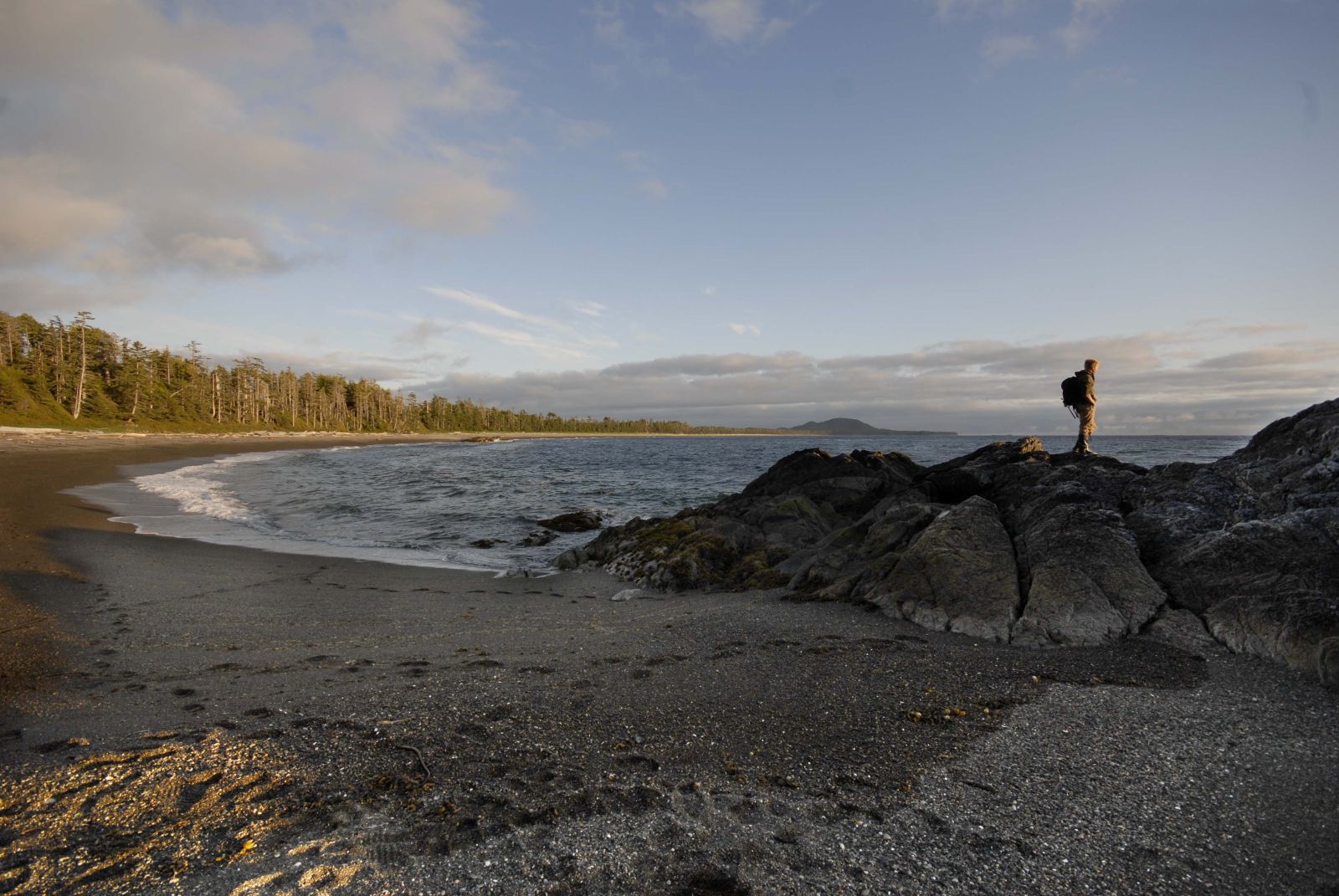
The bow of the Island Roamer angles gently into the K’tzim-a-deen (Khutzeymateen). A coffee mug rests against my leg as I lean back against the sailboat. Towering forests drape over the inlet and capture the clouds. They seem to be resting there, as if they are taking a nap before making their way further east. I, too, find myself overcome with a deep sense of peace.
We had sailed casually, taking our time and enjoying the intertidal zones of scattered islands off the coast before it was our day to enter the park on the northern tip of British Columbia. Last night, She, the sailing boat, was anchored in a small cove shaped like a seal. I’m hooked.
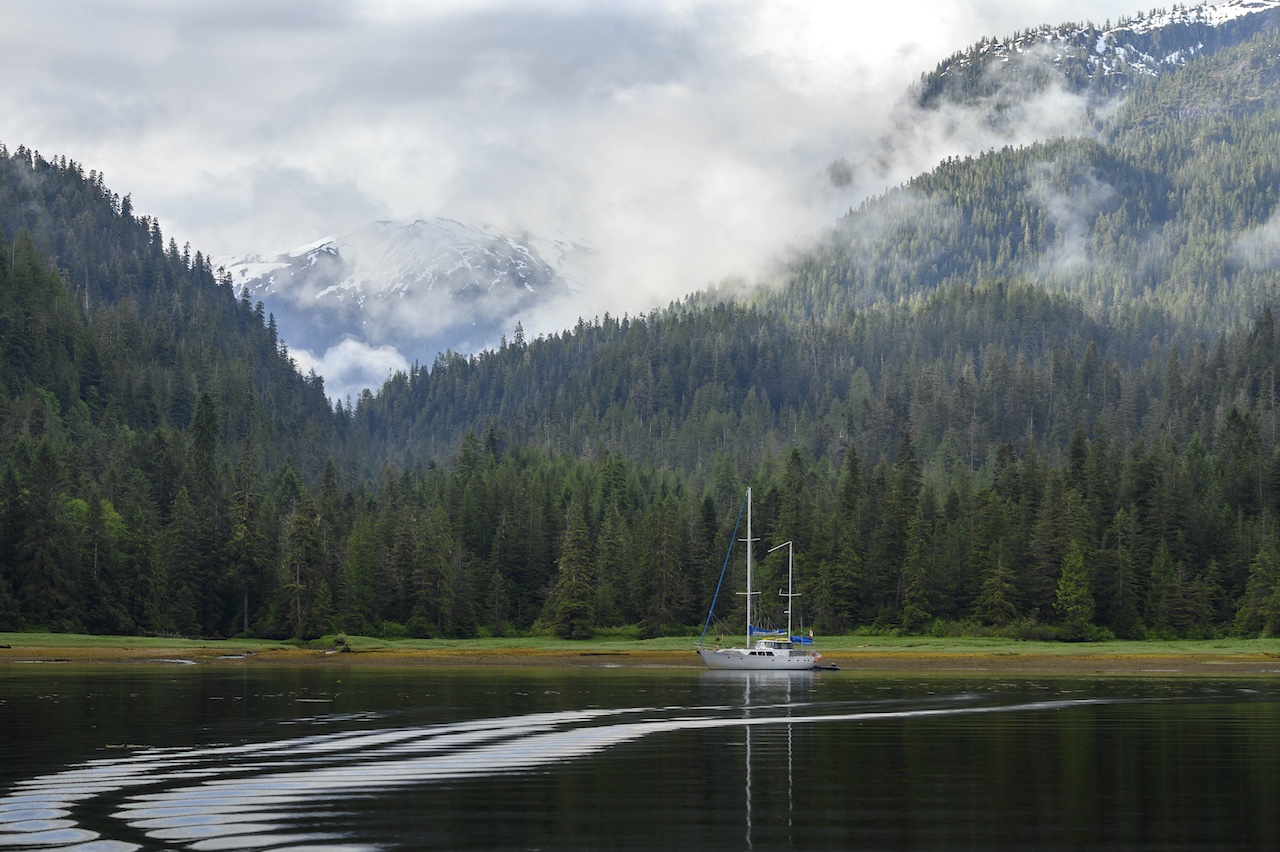
Binoculars hang across my chest, but instead of spotting eagles, seals or bears, I close my eyes for a moment. The air is tinged with salt and cedar, and I have a hard time imagining being anywhere else.
In the 1980s and early 1990s, the Sitka spruce, cedars and hemlock trees, hundreds of feet tall and older yet, were at risk of being logged or pulled into industry. Coast Tsimshian people and leaders from Lax Kw’alaams advocated for the valley’s protection. For millennia, it had been known as a place of bears, fish and seasonal harvesting. After years of pressure from scientists, conservationists, and Indigenous leaders, the valley of the bears was protected in 1994 as Canada’s first grizzly bear sanctuary.
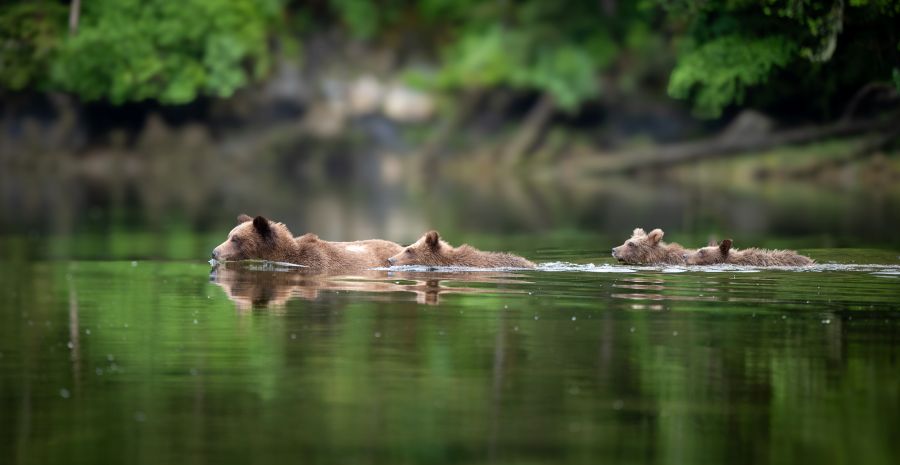
The Khutzeymateen is tightly regulated, with intentionally limited permits and very few visitors. Bears dig for clams at low tide and feast on lyngbye’s sedge at high tide, ideally consuming 100 pounds a day. Human use of the shoreline is prohibited and there has been no bear hunt here since its establishment. Because of this, the bears grow up knowing they are safe. It has made the K’tzim-a-deen one of the best places in the world to observe bears in their natural habitat, doing bear things.
I open my eyes again and smile.
This philosophy – that bears come first and people come second – has become the treasure of this valley.
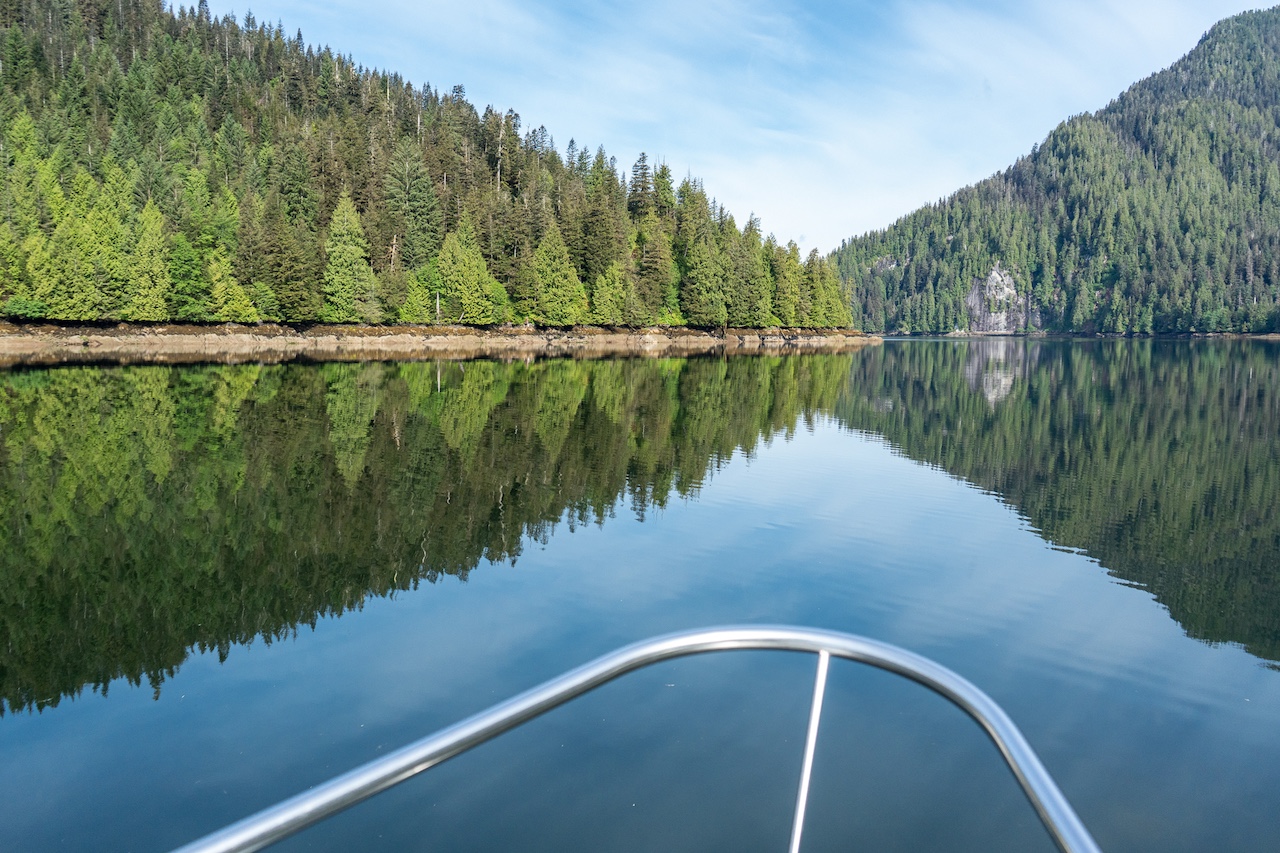
We are now deep in the inlet and off to the portside of our 68-foot sailboat sits a small green cabin floating on a dock. It looks dwarfed amongst the steep mountain of rainforest behind. We anchor and climb into a zodiac to meet the rangers. It is mandatory to check in at this ranger station. My hand disappears into the grip of a gentleman who introduces himself as Norm. A photo on the wall catches my eye. It appears to be him as a younger man.
“Is this you Norm?”
“Yes,” he answers slowly. “I’ve been a guardian of this park since 1994.”
I hold that information for a minute.
Thirty-one years. Living in this remote cabin from May through September every season.
The nearest community is Lax Kw’alaams, home to the nine allied tribes of the coastal Tsimshian and Norm’s family. It sits along the edge of Chatham Sound and is accessible only by boat or ferry. I learn that Norm worked alongside another guardian for 29 years and Norm’s family visited often. Now, with their children older, his wife Gloria is a guardian as well.
“Have you seen much change in that time?” I ask.
I am eager to ask a thousand questions but try to hold back all my chatter.
Norm again takes his time in answering. I catch his eye drift across the inlet towards the opposite shore. A light breeze pushes against the water and soft raindrops scatter across the surface. I imagine him thinking about black bears and grizzlies, wolves and the salmon run, storms and calm mornings.
“No, not really.”
At first, I am surprised. For the briefest of moment, I wonder if he took my question seriously. But as I would come to realize, Norm is deliberate and honest in his words.
Then I’m awed.
I’m so impressed and thankful that Norm and Gloria, their family, their people and the countless humans fought for this place. They gave a voice to the bears. Because “not really” is of course the perfect answer. It is, in many ways, the greatest success any protected area can hope for. That it has not changed.
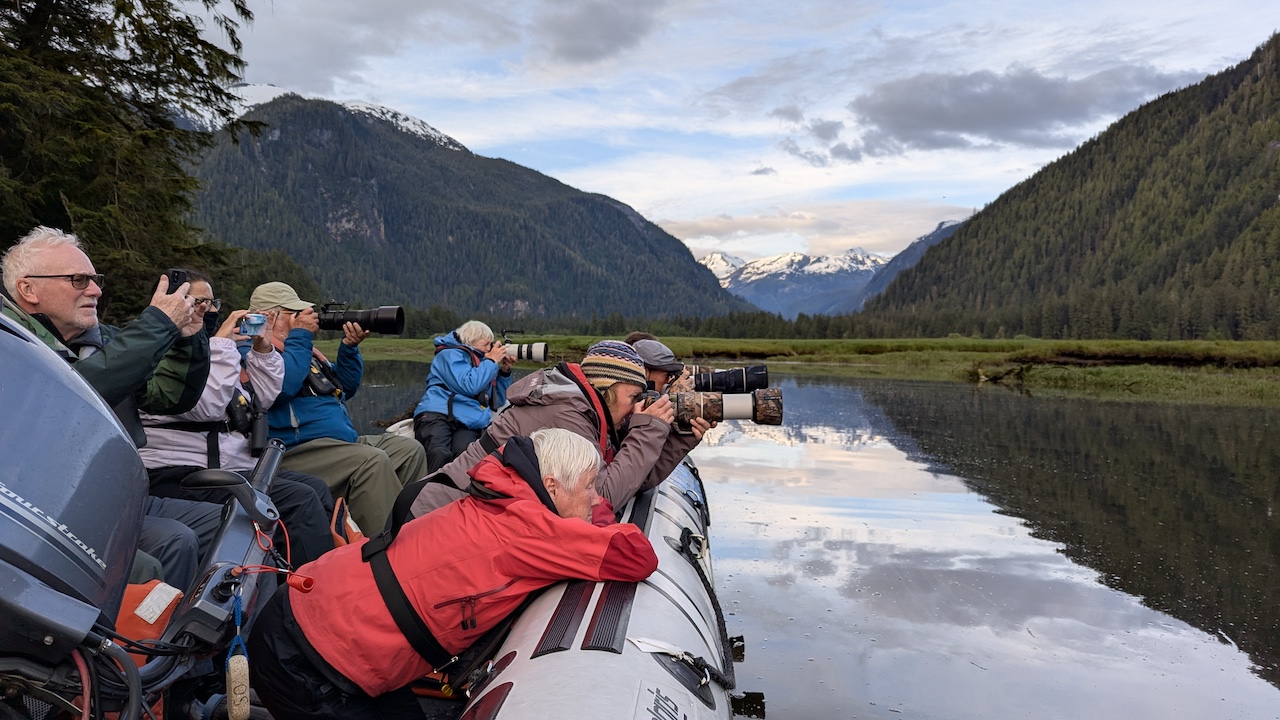
Back aboard the Island Roamer, we settle into our home for next two nights near the estuary at the end of the inlet. My friend Eleasha and I head below deck and dance around each other in our tiny cabin while piling on layers and rainboots. Eleasha laughs again. The two of us have been laughing as friends since we were barely adults. My large camera lens is wrapped in plastic and secured with tape. I am covered head to toe in waterproof gear. I’m not sure whether I look like an intrepid explorer or like a little kid ready to go play in the rain.
Honestly, I feel like both.
It is nearing hightide and the sun has started to drop. Within minutes we spot our first bear.
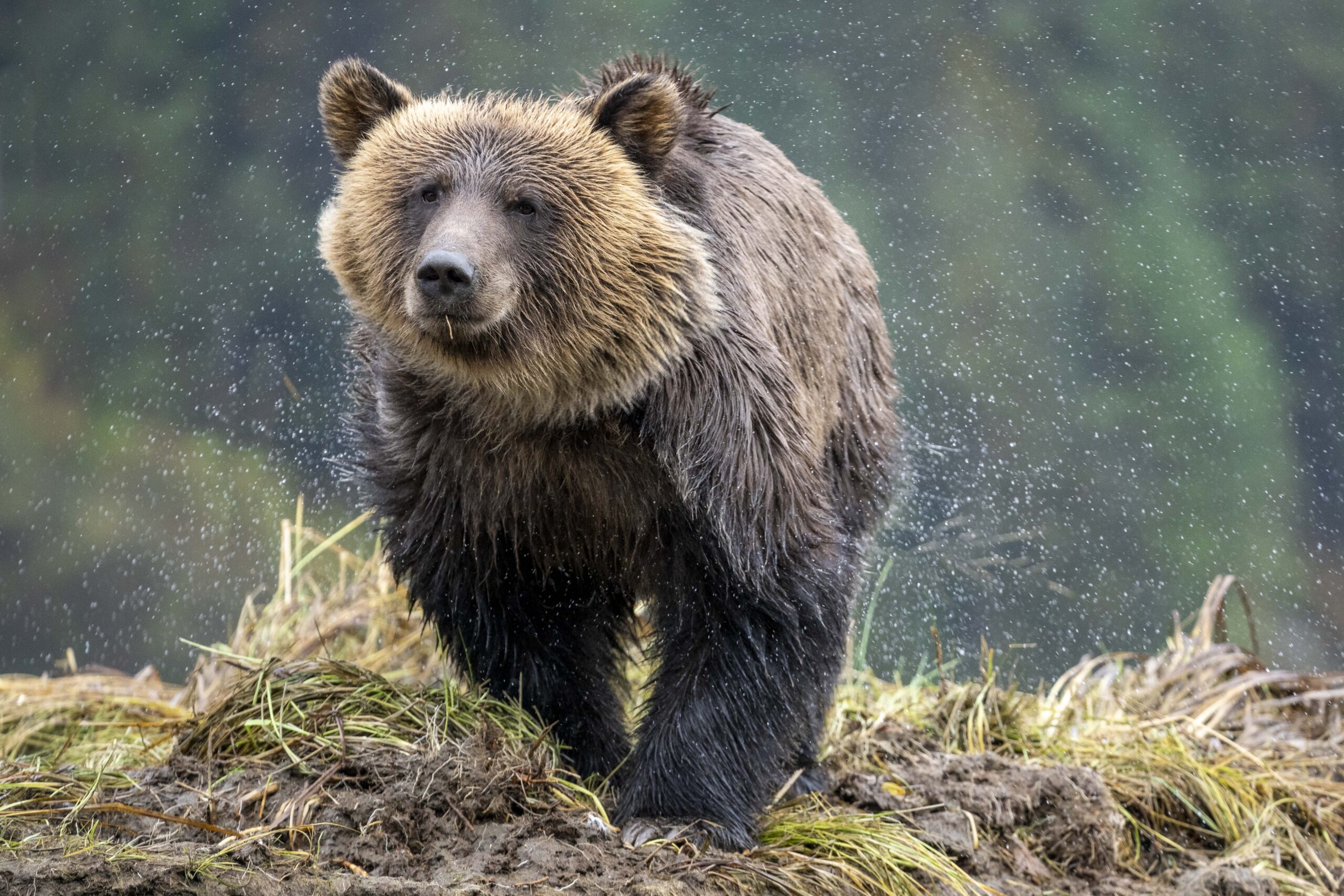
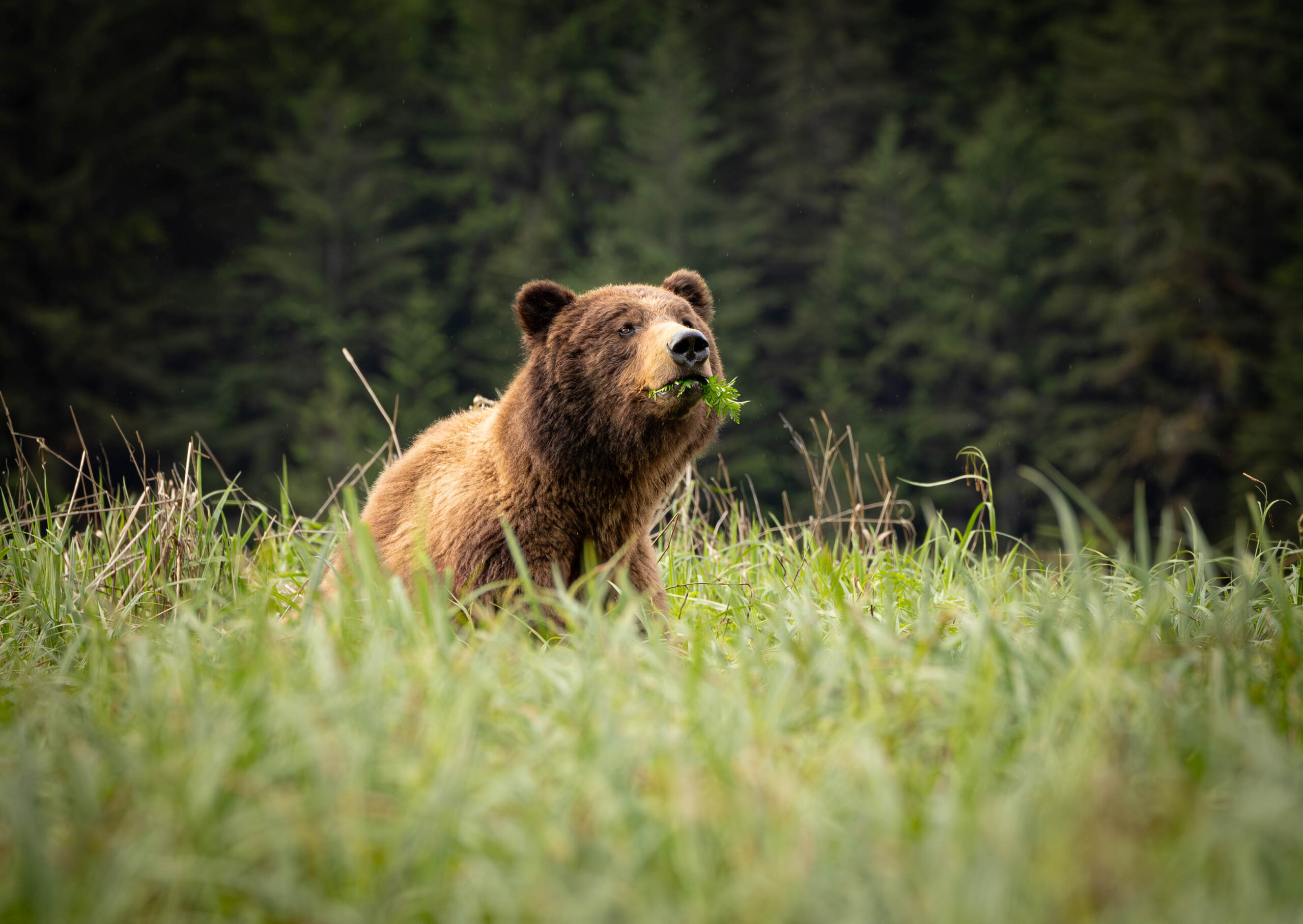
We are as quiet as possible. The zodiac skims the waterline of a rivulet. A bubbling cascade of trills from a Pacific wren breaks the quiet. The drumming of a grouse joins in. As the tide rises, more channels of the estuary open before us. Then we see him – a huge male grizzly. He had already caught our scent drifting on the wind. Following his gaze, we notice a female on the opposite side of the channel, just on our right. We quickly realize we have arrived in the middle of a courtship and carefully back the zodiac away.
The female tempts the male to come across.
He refuses.
She continues her invitation. The huge brown male responds by testing the water with his front paws before stepping back. He huffs, breathes heavily and shakes his head as if saying.
“No way, you come over here.”
She doesn’t budge. She appears to be a third of his size, her coat a much lighter golden brown. She decides to come closer to us, further away from him. As if she can no longer be bothered. Perhaps they have mated several times already. They may continue to mate until he leaves, or another large male enters the area. She gives us beautiful moments with her, potentially pretending that she could care less what he does, before she then skips back towards him. It is a game. She ducks into the forest, immediately hidden.
The male chuffs and creates such a commotion that all of us can imagine him grumbling,
“Fine! You win.”
He turns toward the water and finally wades across.
He turns toward the water and finally wades across.
That first day, we encountered nine grizzly bears. I could do this forever. Study bear behaviour. Watch them move through their natural lives.
Nearly three hours drift away with the tide, passing far more quickly than I realized. Our time is up and we make our way back to our floating sanctuary.
I am so honoured to be in a place that has belonged to the wildlife for much longer than any of us.
And I am grateful that it has withstood the test to time.
Conservation for the win. Way to go humans.
Photos: Eddy Savage, Jéremy Mathieu, Sabine Moll, Lianne Thompson