

Aquaculture has been a long-practiced innovation by many coastal First Nations in British Columbia. By creating gardens, weirs, traps, and houses, coastal First Nations have sustainably maintained and harvested a variety of food sources including clams, herring eggs, fish, and even octopus. These long practiced systems passed down through hundreds of generations are gaining traction once again as First Nation stewardship of their own land continues to increase, and sustainable food harvesting becomes more prevalent.
Clam Gardens & Restoration
Clam gardens are evidenced along a large swath of the Pacific Northwest – oral historical and archaeological evidence show that clam gardens range from Alaska, all along the coastline of British Columbia, and into Washington state. While Indigenous knowledge holders understand that clam gardens have been around since the “beginning of time,” a recent study out of Simon Fraser University using carbon dating practices has found that some clam gardens along the coast are 3,500 years old, and what Dana Lepofsky, a co-author of the paper, noted that “… some individual gardens were used for thousands of years and were still being used until very recently.”
So how do these incredibly productive and sustainable gardens work? Clams live in the intertidal zone as they require time both covered and uncovered by tidal water with varying species living at different intertidal elevations. A clam garden works to extend this intertidal zone where clams thrive, typically through the building of a rock wall at the low tide line that then traps sediment and creates a flat plateau. Once a garden was built, much like a terra firma garden, it needed maintenance and upkeep for it to thrive: tilling sediment, selective harvesting, and clearing of seaweed are all ways to help clam gardens thrive. A healthy clam garden can produce as much as four times the number of butter clams and twice as many littleneck clams compared to an unmodified shoreline.
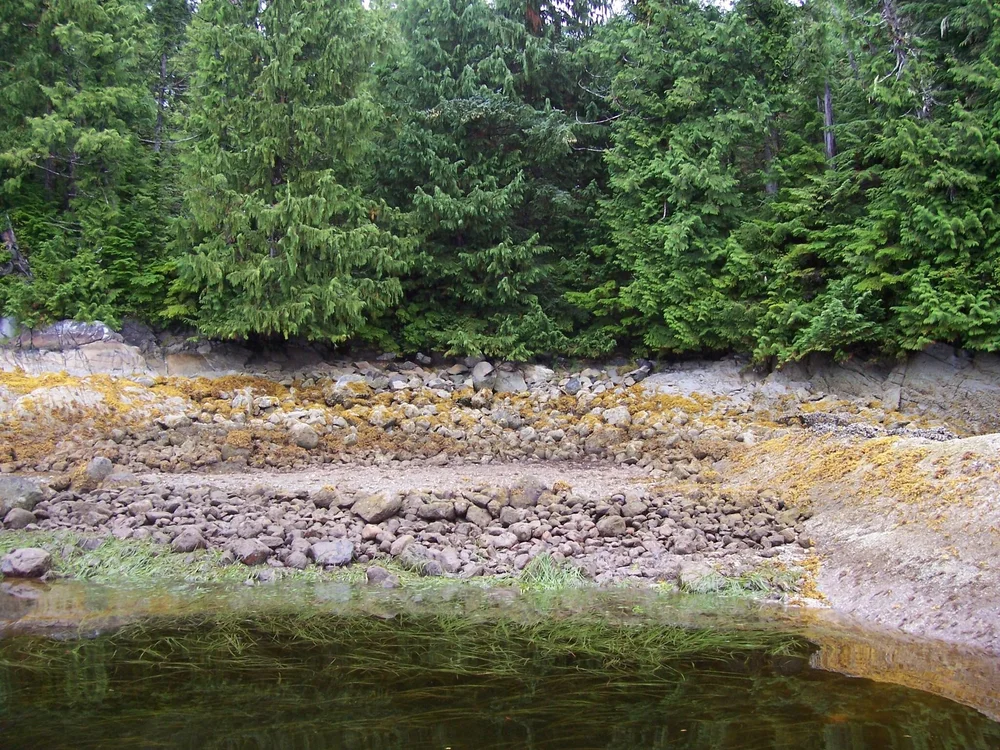
Clam garden on British Columbia’s Central Coast – Photo by Elroy White
From Hardship to Restoration
Colonialism created a major barrier for all aquaculture to be maintained. Lack of access to traditional land as well as restrictions placed on traditional practices made it incredibly difficult to maintain sea gardens, traps, etc. As decades went on, ocean acidification rose, biotoxin blooms become more prevalent, and the continued privatization of the foreshore continued to mount hurdles, while climate change introduced a new set of issues including the increase in new invasive species, rising ocean temperature, and higher risk of coastal erosion.
We are thankfully seeing these practices be restored along the coast in areas where harvesting has been practiced for millennia, one such area being the islands within the Salish Sea. A partnership between the Hul’q’umi’num’ and WSÁNEĆ First Nations and Parks Canada started in 2018 to restore and maintain various clam gardens. Results from the study found an increase in juvenile clam species within the gardens, pointing to positive outcomes and reaffirming the importance of the human-nature connection
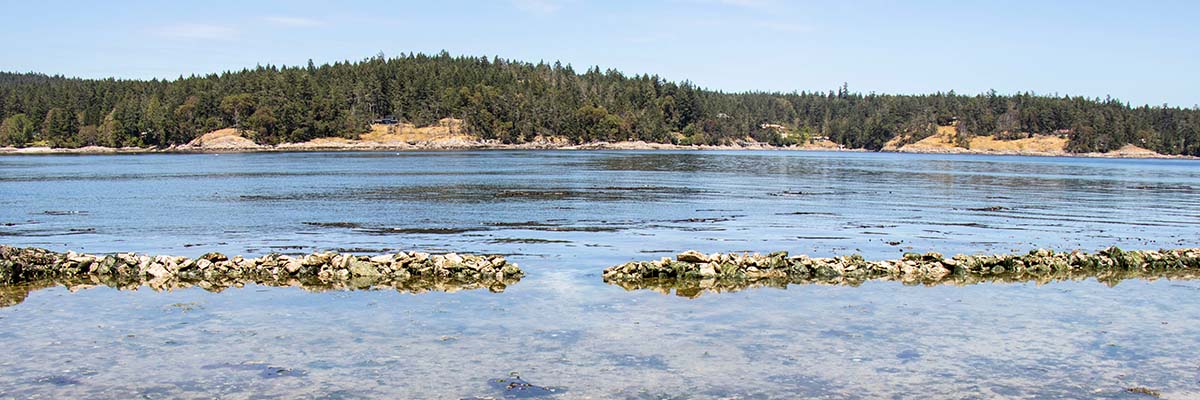
Clam Garden wall being rebuilt in the Salish Sea as part of joint Parks Canada & — initiative. Photo by Ryan Enright / Parks Canada
Sharing & Expanding Knowledge
A previous Bluewater Haida resource guide, Barb Wilson, along with other knowledge keepers and researchers, are working together to highlight the wide variety of aquaculture used by Indigenous groups all over the Pacific Ocean. While communities around the globe are working to restore and re-establish these harvesting practices, like that seen in the Gulf Islands, this group sought to paint a story of each practice, intertwining both traditional and scientific knowledge to provide a clear picture of sustainable aquaculture.
Please visit Sea Garden Collective to learn more on this project